
















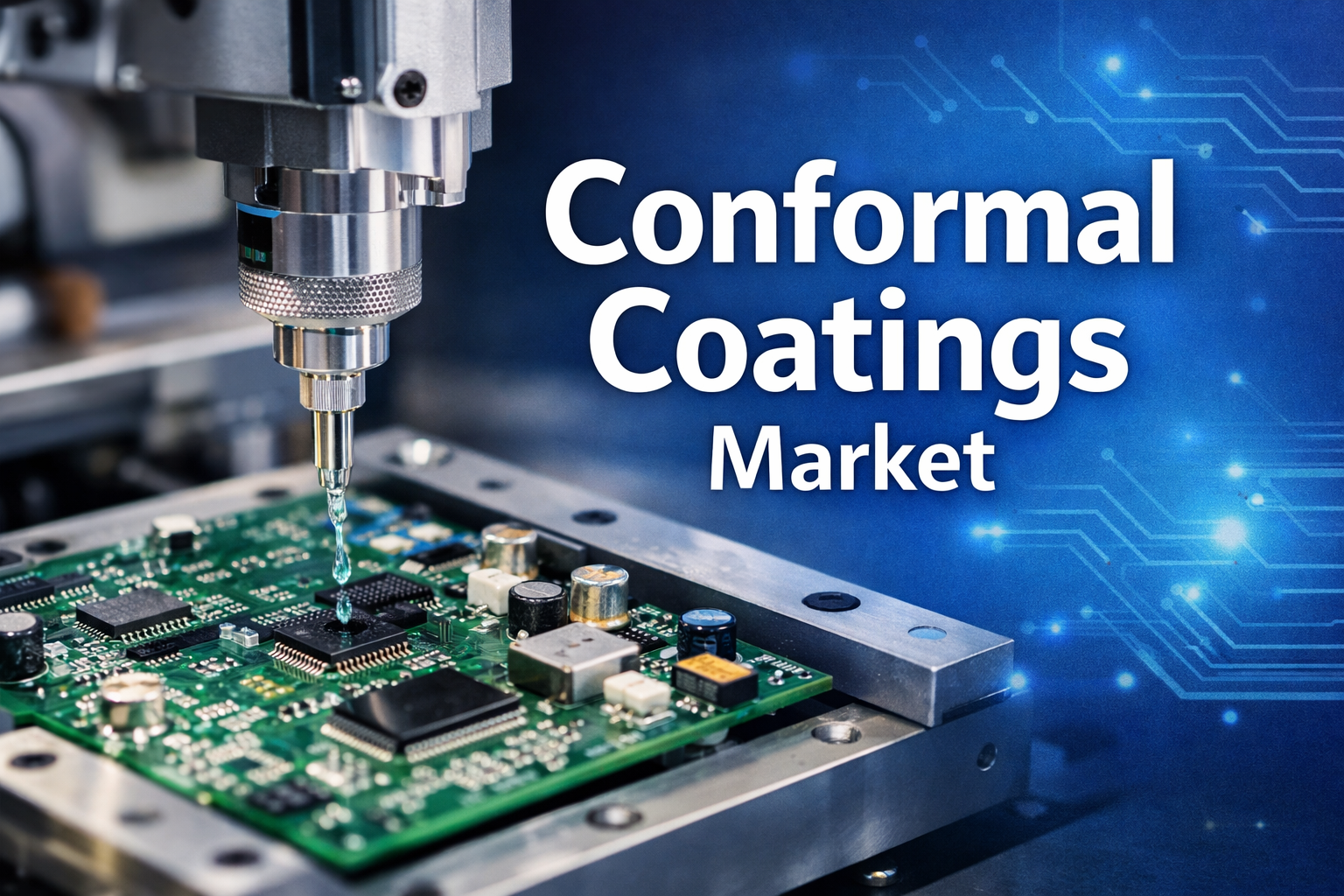
Conformal coatings have emerged as a crucial solution in safeguarding electronic components from environmental threats, ensuring their longevity and reliability. These thin, protective layers are applied to printed circuit boards (PCBs) and other sensitive electronic assemblies to shield them from moisture, dust, chemicals, and temperature extremes. In an era where electronics are increasingly compact and sophisticated, the demand for conformal coatings has surged, driven by the need for devices that perform consistently in harsh conditions. The industry for these protective coatings is experiencing steady growth, reflecting their essential role across diverse sectors, including automotive, aerospace, consumer electronics, and industrial applications.
The Conformal Coatings Market is witnessing significant expansion as connected devices, IoT-enabled systems, and smart electronics become more prevalent. Devices such as wearables, smart home gadgets, and industrial sensors are frequently exposed to environmental stressors that could compromise performance if not adequately protected. Conformal coatings act as a critical barrier, preserving the integrity of these components and preventing costly failures. Moreover, as the electronics industry continues to miniaturize components, the precision application of these coatings becomes more critical, prompting innovations in coating technologies that offer enhanced coverage without adding bulk or affecting device functionality.
One of the primary drivers behind the increased use of conformal coatings is the rapid expansion of the automotive and aerospace sectors. Modern vehicles increasingly rely on advanced electronics for navigation, safety, and connectivity, which must endure vibration, temperature fluctuations, and exposure to liquids. Aerospace applications similarly demand extreme reliability under high-altitude conditions, where components face moisture, UV radiation, and wide temperature variations. Conformal coatings, by providing a protective layer that resists corrosion and environmental degradation, are vital in ensuring that these systems operate seamlessly over long periods. Additionally, regulatory standards and industry certifications have heightened the focus on component protection, further boosting the adoption of these coatings.
The versatility of conformal coatings also contributes to their growing prominence. They are available in various types, such as acrylics, polyurethanes, silicones, and epoxy-based coatings, each offering specific advantages for different applications. Acrylic coatings are known for their ease of application and reworkability, making them suitable for general electronics protection. Polyurethane coatings provide superior chemical and abrasion resistance, ideal for industrial environments. Silicone coatings excel in high-temperature scenarios, commonly found in automotive and aerospace electronics. Epoxy-based coatings deliver robust mechanical strength and chemical resistance, catering to heavy-duty applications. The availability of these options enables manufacturers to choose coatings that precisely match the operational requirements of their devices, enhancing product performance and reliability.
Technological advancements are also shaping the future of conformal coatings. Automated application methods, such as selective coating and robotic dispensing, have improved efficiency and consistency while minimizing human error. These innovations not only reduce production costs but also ensure uniform coverage, which is crucial for high-reliability electronics. Furthermore, environmentally friendly formulations are gaining attention, as industries seek coatings that comply with stricter environmental and safety regulations without compromising protection. Water-based and low-VOC (volatile organic compound) coatings are becoming popular alternatives, reflecting a broader trend toward sustainable electronics manufacturing.
In addition to industrial and automotive sectors, consumer electronics represent a significant growth avenue for conformal coatings. Smartphones, tablets, wearables, and other personal devices are increasingly exposed to accidental spills, humidity, and dust. Applying a protective coating extends the device’s operational life and reduces warranty claims, providing manufacturers with both economic and reputational benefits. The trend toward smart, connected consumer devices has intensified competition among manufacturers to deliver durable and reliable products, reinforcing the importance of advanced protective coatings.
The global adoption of conformal coatings is expected to grow steadily over the next decade. In 2023, the industry was valued at approximately USD 1.02 billion, and projections indicate it will reach around USD 1.68 billion by 2032, reflecting a compound annual growth rate (CAGR) of 5.70% from 2024 to 2032. This growth is driven by factors such as technological innovation, increasing reliance on electronics in critical applications, and the need for sustainable, high-performance protective solutions. As industries continue to prioritize device reliability and environmental compliance, the role of conformal coatings in protecting electronic assets will only become more pronounced.
In conclusion, conformal coatings are no longer optional but essential for ensuring the longevity, reliability, and performance of modern electronic devices. Their protective properties, adaptability across sectors, and compatibility with emerging technologies make them a vital component of the electronics ecosystem. With growing demand across automotive, aerospace, industrial, and consumer electronics, the industry is poised for sustained growth, driven by innovation and the ever-increasing need for durable, high-performance electronics in a rapidly evolving technological landscape. As businesses continue to embrace advanced coatings, the benefits in terms of product durability, performance reliability, and operational efficiency are set to expand, highlighting the strategic importance of conformal coatings in the electronics sector.


