















In a space where early-stage access has long been controlled by a small circle of insiders, SeedList has burst onto the scene with undeniable momentum. The launchpad’s debut community rollout reached 100,000 members across Telegram and Twitter in just 24 hours, setting a fresh benchmark for participation in token crowdfunding. The scale of interest makes clear that investors and contributors around the world are demanding a fairer, more inclusive path into Web3 fundraising—especially within the Solana ecosystem.
What makes the milestone stand out is not just the raw number of signups but the speed of growth. SeedList’s Telegram channels were active within hours of launch, buzzing with engagement from thousands of new members. By the end of day one, more than 20,000 had registered to participate, and by the following morning, the total had surged to 100,000. That kind of exponential uptake is unusual even in crypto, where hype cycles can often fuel rapid interest, suggesting that the appetite for SeedList is rooted in something deeper: trust in a model that emphasizes transparency and merit over privilege.
“This kind of turnout is exactly what we hoped to see, but even we didn’t expect it to happen so quickly,” said Brijesh Patel, SeedList’s co-founder and a former partner at Pronomos Capital. Patel’s background includes work with investors and thinkers such as Marc Andreessen (a16z), Balaji Srinivasan (Coinbase), the Winklevoss twins (Gemini), and Naval Ravikant of AngelList, parent of CoinList. “For years, communities have been told to wait while big allocations go straight to funds. People are clearly tired of that cycle. What we’re seeing is proof that a new standard for fundraising is possible, one where contribution and participation matter just as much as capital.”
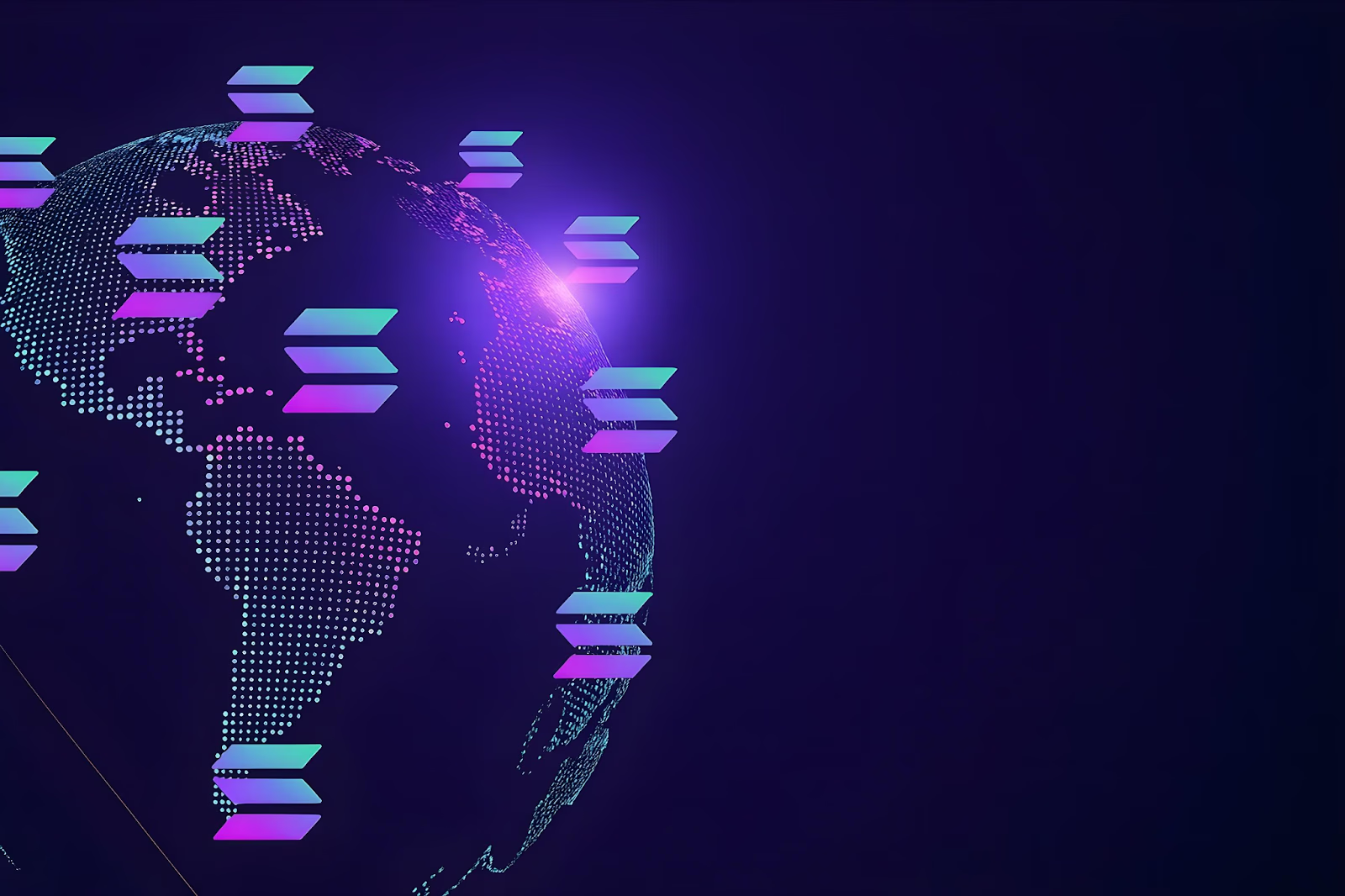
SeedList’s choice to build within Solana’s ecosystem has proven pivotal. Solana is known for its speed, efficiency, and low costs, making it a natural hub for token experiments and large-scale adoption. By rooting itself in this infrastructure, SeedList ties its mission to one of the most active blockchain communities in the world. This synergy not only supports new projects but also strengthens the case for Solana as the go-to base layer for innovative funding models.
Co-founder CryptoSheldon reinforced this point: “Solana is where you can actually bring people in at scale without worrying about fees or friction. What excites us is that SeedList doesn’t just exist on Solana—it thrives because of it. When you combine contributor-focused distribution with tools like Pump.fun for experimentation, Orca for liquidity, and wallets like MetaMask or TrustWallet that make Solana tokens more accessible, you end up with conditions for mass adoption. That’s exactly what our numbers are showing from day one.”
The massive wave of signups also shines a light on how outdated the traditional venture capital model has become in the crypto space. For years, private allocations were reserved for established funds or exclusive circles, leaving retail and grassroots contributors locked out of early opportunities. SeedList is breaking away from this legacy by rewarding value-added contributions. Developers who code, advisors who provide insight, marketers who help generate awareness, and communities who drive adoption are all prioritized. AI-driven allocation systems and curated contributor tiers ensure this process remains structured and fair, rather than dependent on random lotteries or opaque decisions.
For crypto users worldwide, this approach offers a rare chance to be included from the very beginning. SeedList’s global-first launch strategy underscores this point. Communities from across North America, Europe, Asia, Africa, and Latin America all joined during the opening hours, underscoring that demand for equal access is not limited to a single region but is universal across emerging markets and established hubs alike.
While the six-figure milestone makes headlines, the SeedList team has been clear that this is only the starting line. The platform’s roadmap includes expansion of contributor tiers, partnerships with exchanges, integrations with broader DeFi protocols, and ongoing use of AI to evaluate contributions. The ambition is not to spark one-off fundraising events but to create sustainable ecosystems where communities stay engaged beyond the initial token launch. That means stronger liquidity, healthier price discovery, and better long-term outcomes for both projects and participants.
The implications go beyond SeedList itself. By proving that more than 100,000 people will actively engage with a fair crowdfunding platform in just one day, the project sends a signal across the entire industry. The narrative is shifting away from exclusivity and toward accessibility, from gatekeeping to community inclusion. This is a model that, if embraced widely, could redefine how new projects launch and scale in the coming years.
As Patel summed up: “This is a moment where the industry has to pay attention. In just 24 hours, we’ve shown that the demand for a community-first model is massive, and it isn’t going away. SeedList is going to keep building with contributors, not just capital, at the center. If our first day looked like this, the future of crowdfunding is going to look very different than the past.”


