













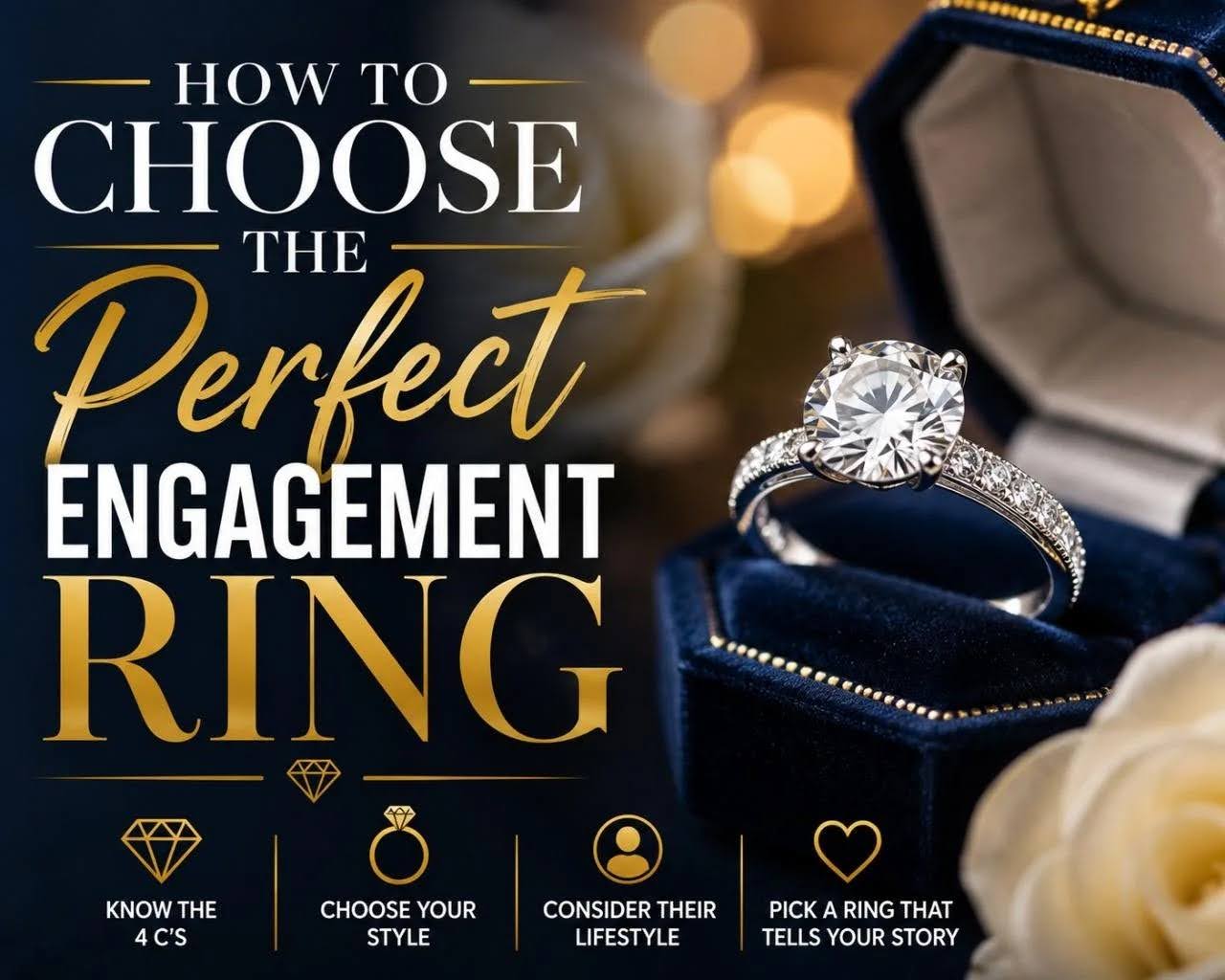
Choosing an engagement ring is exciting, but the number of decisions involved can quickly become overwhelming. Diamond shape, gemstone type, setting style, metal, carat weight, budget, ring size, and personal taste all influence the final choice.
The perfect ring is not necessarily the largest or most expensive option. It is the ring that fits the wearer’s style, feels comfortable, works with their lifestyle, and represents your relationship in a meaningful way.
Understanding how to choose an engagement ring before you begin shopping can help you focus on the details that genuinely matter and avoid paying for features that may not make a noticeable difference.
Start With a Realistic Budget
Before looking at diamonds or settings, determine how much you are comfortable spending.
Forget rigid rules suggesting that an engagement ring should cost a specific number of months of salary. Your budget should reflect your own financial situation and priorities.
Remember that the total price may include more than the center stone. You may also be paying for:
-
The setting
-
Accent stones
-
Precious metal
-
Customization
-
Engraving
-
Insurance
-
Future maintenance
Establishing a comfortable range makes the rest of the shopping process considerably easier.
Learn Your Partner’s Personal Style
The ring should reflect the person wearing it.
Look at the jewelry your partner already owns. Do they usually wear simple pieces or bold designs? Do they prefer white metals, yellow gold, or rose gold? Are their favorite pieces modern or vintage-inspired?
These clues can help narrow down the enormous number of available engagement ring styles.
Look at the Jewelry They Wear Every Day
Everyday jewelry can reveal more than occasional statement pieces.
Pay attention to:
-
Metal color
-
Ring styles
-
Necklace designs
-
Earring shapes
-
Gemstone preferences
-
Minimalist versus elaborate designs
Someone who consistently wears delicate jewelry may prefer a refined solitaire over an extremely elaborate halo design.
Use Saved Photos for Inspiration
Many people save engagement ring inspiration long before becoming engaged.
If you can discreetly access rings your partner has publicly saved or shared, look for patterns.
Maybe nearly every ring features:
-
An oval diamond
-
Yellow gold
-
A thin band
-
An emerald-cut center stone
-
A hidden halo
Repeated details are often more meaningful than one isolated picture.
Ask Friends or Family
A close friend, sibling, or family member may already know exactly what your partner wants.
They may know preferences regarding:
-
Diamond shape
-
Natural versus lab-grown diamonds
-
Ring size
-
Metal
-
Setting style
Just choose someone capable of keeping the proposal confidential.
Decide Whether the Ring Should Be a Surprise
Not every engagement ring needs to be chosen secretly.
Some couples prefer shopping together.
Others discuss major preferences while leaving the final ring and proposal as surprises.
There is no wrong approach.
If your partner has strong jewelry preferences, involving them in the selection process can significantly reduce the risk of choosing something they would not want to wear every day.
Understand the Four Cs
When researching how to choose an engagement ring, you will quickly encounter the Four Cs:
-
Cut
-
Color
-
Clarity
-
Carat
These characteristics are commonly used to evaluate diamonds.
Understanding what each means can help you compare stones more intelligently.
Prioritize Diamond Cut
Cut is particularly important because it influences how effectively a diamond interacts with light.
A well-cut diamond can appear lively, bright, and visually impressive.
Instead of automatically spending the largest portion of your budget on carat weight, consider prioritizing a beautiful cut.
A well-cut smaller diamond can be more visually striking than a larger diamond with poor proportions.
Understand Diamond Color
Diamond color grading evaluates the presence of noticeable body color in a diamond.
You do not necessarily need the highest available color grade to have a beautiful engagement ring.
The appropriate choice can depend on:
-
Diamond shape
-
Setting metal
-
Personal preference
-
Budget
Some slightly warmer diamonds can look particularly attractive in yellow or rose gold settings.
Understand Diamond Clarity
Diamonds can contain internal characteristics known as inclusions and external characteristics known as blemishes.
Clarity grading describes these features.
Rather than automatically buying the highest clarity grade available, many shoppers look for a diamond that appears clean to the unaided eye under normal viewing conditions.
That can allow more of the budget to be allocated toward characteristics with greater visible impact.
Understand Carat Weight
Carat measures diamond weight rather than exact physical dimensions.
Two one-carat diamonds can appear different in size depending on their:
-
Shape
-
Depth
-
Proportions
-
Measurements
Do not shop according to the carat number alone.
Compare how individual stones actually appear.
Choose the Right Diamond Shape
Shape has a major influence on the overall personality of an engagement ring.
Popular options include:
-
Round
-
Oval
-
Emerald
-
Cushion
-
Radiant
-
Pear
-
Marquise
-
Princess
There is no objectively best shape.
Choose according to personal style and how the diamond looks on the wearer’s hand.
Round Brilliant
Round diamonds are a classic engagement ring choice.
They work with almost every setting style, from simple solitaires to elaborate halos.
For someone who loves traditional jewelry and plenty of sparkle, a round brilliant can be an excellent option.
Oval
Oval diamonds combine an elongated silhouette with brilliant-style faceting.
They can look elegant and contemporary while providing substantial visual presence.
Oval diamonds work particularly well with:
-
Solitaires
-
Hidden halos
-
Pavé bands
-
Three-stone settings
Compare individual stones carefully because proportions and visible light patterns can vary.
Emerald Cut
Emerald-cut diamonds offer a completely different aesthetic.
Their long step-cut facets produce broad flashes of light rather than the intense sparkle associated with brilliant cuts.
They can be ideal for someone who prefers sophisticated, understated jewelry.
Because the facets are open and prominent, clarity characteristics may also be easier to notice.
Cushion Cut
Cushion-cut diamonds typically combine a square or rectangular outline with softened corners.
They can work beautifully in both contemporary and vintage-inspired settings.
Cushions vary considerably in proportion and faceting, so comparing several stones in person can be useful.
Radiant Cut
Radiant diamonds combine an angular outline with brilliant-style faceting.
They can provide significant sparkle while maintaining a rectangular or square appearance.
A radiant center stone can be especially striking in a solitaire or three-stone design.
Pear Shape
Pear-shaped diamonds combine elements of round and marquise shapes to create a distinctive teardrop silhouette.
They can appear elegant and visually elongating.
Because the pointed end can be vulnerable to damage, the setting should provide appropriate protection.
Consider Natural vs. Lab-Grown Diamonds
Modern shoppers also need to decide whether they prefer a natural or laboratory-grown diamond.
Both are diamonds, but their origins differ.
Natural diamonds formed through geological processes within the Earth.
Lab-grown diamonds are produced in controlled technological environments.
Lab-grown options can often allow shoppers to obtain greater size or specifications within a particular budget, while natural diamonds may appeal to people who value geological origin, rarity, and tradition.
Personal preference should guide the decision.
Consider Alternative Gemstones
An engagement ring does not have to contain a diamond.
Depending on the wearer’s preferences, alternative gemstones can create a distinctive ring.
Options may include:
-
Sapphire
-
Ruby
-
Other gemstones appropriate for the intended use
Durability matters because engagement rings are commonly worn every day.
Discuss gemstone hardness, toughness, maintenance, and setting requirements with a knowledgeable jeweler before choosing an alternative center stone.
Choose the Setting Style
The setting has an enormous influence on the finished ring.
The same diamond can look dramatically different depending on how it is mounted.
Common engagement ring settings include:
-
Solitaire
-
Halo
-
Hidden halo
-
Pavé
-
Three-stone
-
Bezel
-
Vintage-inspired designs
Consider both appearance and practicality.
Solitaire Engagement Rings
A solitaire places most of the visual attention on the center stone.
Its simplicity makes it timeless and versatile.
Solitaire rings can also pair easily with many wedding band styles.
For someone who prefers understated jewelry, a beautifully proportioned solitaire may be all that is needed.
Halo Settings
A halo surrounds the center stone with smaller diamonds or gemstones.
This can create additional sparkle and increase the ring’s visual presence.
Halo settings range from subtle to elaborate, so consider how much detail the wearer typically prefers.
Hidden Halo Settings
A hidden halo places smaller diamonds beneath or around the base of the center stone rather than surrounding it from the top.
From above, the ring may still resemble a solitaire.
From the side, additional sparkle becomes visible.
This can be an appealing compromise between minimalist and detailed designs.
Pavé Bands
Pavé settings incorporate small diamonds along the band.
They can add considerable sparkle without changing the shape of the center stone.
However, delicate diamond-set bands may require more maintenance than plain metal bands.
Consider the wearer’s lifestyle before choosing an extremely thin or intricate design.
Three-Stone Engagement Rings
Three-stone rings feature a center stone accompanied by two side stones.
The side stones can match the center or create contrast through different shapes.
Three-stone designs can provide substantial visual impact and offer opportunities for meaningful symbolism.
Bezel Settings
A bezel setting surrounds all or part of the gemstone’s perimeter with metal.
This creates a clean, contemporary appearance and can provide additional protection around the stone’s edge.
Bezel settings can be particularly attractive for people with active lifestyles who prefer a lower-profile design.
Choose the Right Metal
Metal affects both appearance and maintenance.
Popular engagement ring metals include:
-
Platinum
-
White gold
-
Yellow gold
-
Rose gold
The right choice depends on aesthetic preferences, budget, wear habits, and the specific ring design.
Yellow Gold
Yellow gold provides a warm, traditional appearance.
It works particularly well with vintage-inspired designs and can create attractive contrast with colorless or near-colorless diamonds.
If your partner already wears mostly yellow-gold jewelry, that is a strong clue.
White Gold
White gold offers a bright, neutral appearance that complements diamonds easily.
Depending on the alloy and finish, maintenance may eventually be required to preserve its appearance.
Ask the jeweler what long-term care the specific ring will need.
Rose Gold
Rose gold provides a warmer pink-toned appearance.
It can work beautifully with romantic or vintage-inspired designs and offers an alternative to traditional yellow and white metals.
As with any metal choice, personal style should be the deciding factor.
Platinum
Platinum is a naturally white precious metal commonly used for engagement rings.
It is known for durability and is frequently chosen for rings intended for long-term everyday wear.
It also develops its own surface appearance with wear, so ask your jeweler what to expect over time.
Consider the Wearer’s Lifestyle
A ring can look spectacular in a display case but become frustrating if it does not fit the wearer’s daily life.
Think about their work, hobbies, and routines.
Someone who regularly works with their hands may prefer:
-
Lower-profile settings
-
Secure stone placement
-
Simpler bands
-
Protective designs
Lifestyle considerations are an important part of understanding how to choose an engagement ring that remains enjoyable after the excitement of the proposal.
Think About Setting Height
Some center stones sit relatively high above the finger.
This can create a dramatic appearance and may allow certain wedding bands to sit more easily alongside the engagement ring.
However, higher settings may also catch more easily on clothing or objects.
Someone who prioritizes practicality may prefer a lower-profile design.
Consider Prong Security
Prongs secure many engagement ring center stones.
Depending on the stone shape and setting, rings may use different numbers and arrangements of prongs.
Pointed diamond shapes such as pear and marquise cuts often benefit from protective treatment around vulnerable tips.
Ask the jeweler how the selected setting protects the stone.
Get the Ring Size Right
Finding the correct size can be challenging when planning a surprise proposal.
Possible approaches include:
-
Borrowing a ring worn on the correct finger
-
Asking a trusted friend
-
Having a jeweler estimate from an existing ring
-
Shopping together
Remember that fingers can vary in size between hands, so using a ring from another finger may not provide an exact measurement.
Ask Whether the Ring Can Be Resized
Before purchasing, ask about resizing.
Certain designs may have more resizing limitations than others, particularly rings with stones extending around much of the band.
Understanding those limitations before the proposal can prevent complications later.
Think About the Wedding Band Now
The engagement ring will probably eventually be paired with a wedding band.
Consider whether the wearer wants the rings to sit flush together.
Some engagement ring settings naturally accommodate straight bands, while others may require:
-
Curved bands
-
Contoured bands
-
Custom designs
Thinking ahead can make building the complete bridal set easier.
Consider Custom Engagement Rings
If you cannot find exactly what you want, custom design may be worth exploring.
A custom ring can combine elements from several inspirations.
For example, you might choose:
Oval center stone + yellow gold band + hidden halo + personalized engraving
Custom does not necessarily mean excessively complicated. Sometimes customization simply allows you to refine proportions and details.
Ask About Diamond Grading Reports
When purchasing a significant diamond, review available grading documentation.
Depending on the diamond and grading organization, the report may provide information concerning:
-
Carat weight
-
Color
-
Clarity
-
Measurements
-
Proportions
-
Identification
Make sure you understand exactly what the report covers and whether the stone is identified as natural or laboratory-grown.
Compare Diamonds Side by Side
Specifications are useful, but jewelry is visual.
When possible, compare several diamonds together.
You may discover that you prefer one stone even though another has technically higher grades.
Look at:
-
Sparkle
-
Shape
-
Proportions
-
Face-up size
-
Overall appearance
Your eyes should be part of the decision.
View the Ring in Different Lighting
Jewelry-store lighting is designed to make diamonds look impressive.
Ask to view the stone under different lighting conditions when possible.
A diamond may appear different under:
-
Bright jewelry lighting
-
Natural daylight
-
Normal indoor lighting
Seeing it in multiple environments can give you a better understanding of its appearance.
Don’t Chase Specifications You Cannot See
It is easy to become obsessed with numbers while shopping.
A slightly higher clarity or color grade may increase the price without creating a meaningful visual difference to you.
Spend money where you actually appreciate the improvement.
The goal is not to purchase the best grading report. The goal is to purchase a ring you love.
Review the Return and Exchange Policy
Even careful shoppers can change their minds.
Before purchasing, understand:
-
Return period
-
Exchange policy
-
Resizing policy
-
Custom-order restrictions
-
Upgrade policies
Get important terms in writing.
This is particularly valuable when purchasing the ring as a surprise.
Ask About Maintenance
Engagement rings experience daily wear.
Over time, they may require:
-
Cleaning
-
Prong inspection
-
Polishing
-
Resizing
-
Stone tightening
-
Other maintenance
Ask the jeweler what care is recommended for your specific setting and metal.
Consider Jewelry Insurance
An engagement ring can represent a significant financial and emotional investment.
Consider appropriate insurance coverage against risks such as loss, theft, or damage.
Coverage terms vary, so understand exactly what a policy includes and what documentation may be required.
Avoid Choosing Based Only on Trends
Engagement ring trends change constantly.
One year may favor oval diamonds and thin bands. Another may emphasize vintage settings or colored gemstones.
Trends can provide inspiration, but remember that the ring may be worn for decades.
Ask whether your partner genuinely loves the design or whether it simply happens to be popular right now.
Comfort Matters
A ring can be beautiful and still uncomfortable.
Pay attention to:
-
Band width
-
Setting height
-
Side stones
-
Sharp edges
-
Finger coverage
Someone wearing the ring every day will appreciate thoughtful comfort far more than an impressive design that constantly gets in the way.
Create a Shortlist Before Buying
Once you understand the wearer’s preferences, narrow the possibilities.
For example:
Shape: Oval
Stone: Natural or lab-grown diamond
Metal: Yellow gold
Setting: Solitaire or hidden halo
Band: Thin but durable
Budget: Predetermined range
A shortlist turns an overwhelming shopping experience into a manageable decision.
Questions to Ask a Jeweler
Before making the final purchase, ask questions such as:
-
What is the center stone’s origin?
-
Is grading documentation available?
-
How durable is this setting?
-
What maintenance will it require?
-
Can the ring be resized?
-
What is the return policy?
-
What warranty or service is included?
-
Will a straight wedding band sit flush?
-
What should I know about caring for this ring?
A reputable jeweler should be willing to explain your options clearly.
Common Engagement Ring Mistakes to Avoid
Some of the most common mistakes include:
-
Spending beyond your comfortable budget
-
Focusing only on carat weight
-
Ignoring the wearer’s lifestyle
-
Guessing preferences without research
-
Forgetting about the wedding band
-
Ignoring maintenance requirements
-
Buying based solely on trends
-
Failing to review return policies
Taking time to research before purchasing can prevent many of these issues.
FAQs
How much should I spend on an engagement ring?
There is no required amount. Choose a budget that fits your financial situation without relying on arbitrary salary-based rules.
Which diamond shape is best for an engagement ring?
There is no universally best shape. Round, oval, emerald, cushion, radiant, pear, and other shapes can all be beautiful. The best choice depends on the wearer’s personal style.
Should I choose a natural or lab-grown diamond?
Either can be appropriate. Natural diamonds appeal to shoppers who value geological origin and rarity, while lab-grown diamonds can provide greater flexibility in size or specifications within a given budget.
Should an engagement ring be a surprise?
That depends on the couple. Some people love complete surprises, while others prefer selecting the ring together. You can also discuss general preferences while keeping the exact ring and proposal secret.
What is the most important thing to know about how to choose an engagement ring?
The most important part of how to choose an engagement ring is understanding the person who will wear it. Prioritize their style, lifestyle, comfort, and preferences rather than simply choosing the largest diamond or most expensive setting available.
Final Thoughts
Learning how to choose an engagement ring becomes much easier when you stop searching for a universally perfect ring.
There isn’t one.
The perfect engagement ring is personal. It might be a classic round solitaire, an oval diamond in yellow gold, an emerald-cut stone with tapered side diamonds, a colorful sapphire, or a completely custom design.
Start with a comfortable budget, study your partner’s style, understand the major diamond and setting options, and think carefully about how the ring will be worn every day.
Most importantly, choose something that feels connected to the person receiving it.
The specifications make the ring easier to compare. The meaning behind it is what makes it worth wearing for a lifetime.
For more coverage on this topic, see related articles on our publishing site.