
















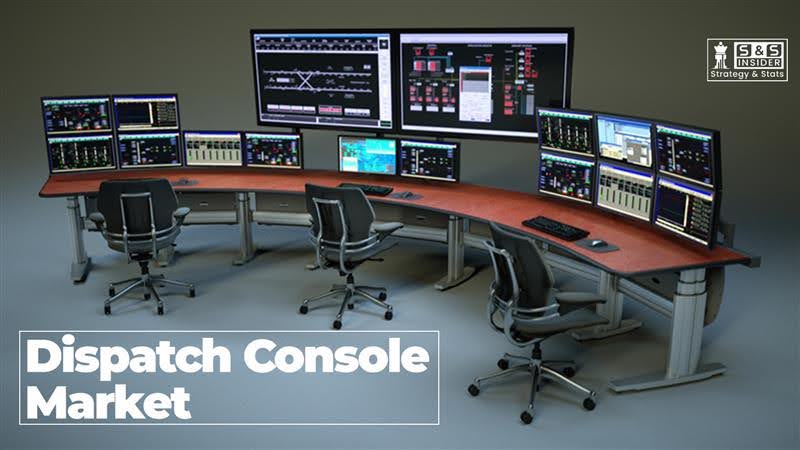
In today’s rapidly evolving digital landscape, efficient communication lies at the heart of every successful organization — from emergency response units and transportation hubs to utilities, defense, and public safety departments. Among the technologies quietly shaping this transformation, dispatch console systems have emerged as a critical element in enabling real-time coordination, seamless data sharing, and operational efficiency across industries.
Dispatch consoles, once confined to traditional two-way radio setups, have evolved into sophisticated, software-driven communication centers that unify multiple channels — voice, data, video, and IoT-based alerts — under one interface. This modernization is redefining how teams collaborate during critical missions and routine operations alike.
The Evolution of Dispatch Consoles
Traditionally, dispatch consoles were simple control panels used to communicate with field units via analog radio frequencies. Their primary role was limited to sending and receiving voice transmissions, often with little data integration. However, as industries began adopting digital communication systems, the scope of dispatching expanded dramatically.
Modern dispatch consoles now integrate cloud-based networking, artificial intelligence (AI), IP communication, and geospatial technologies to enhance situational awareness. They serve as centralized command hubs that help dispatchers access real-time information, track resources, and make faster decisions. This convergence of technologies has transformed the console from a basic communication tool into a mission-critical decision-making platform.
Market Growth and Technological Expansion
Dispatch Console Market was valued at USD 1.89 billion in 2023 and is expected to reach USD 2.89 billion by 2032, growing at a CAGR of 4.94% from 2024-2032.
This steady growth reflects the increasing adoption of advanced dispatch communication systems across public safety, transportation, and industrial sectors. The demand for reliability, interoperability, and scalability is fueling investments in next-generation console platforms.
Emerging technologies such as IP-based dispatch systems, cloud-hosted consoles, and AI-enabled command software are transforming the way communication infrastructure is deployed. Organizations are shifting toward systems that offer cross-network integration — allowing dispatchers to connect seamlessly over land mobile radio (LMR), LTE, and broadband networks simultaneously.
Moreover, as industries expand globally, the need for centralized monitoring and control across multiple sites is driving the popularity of web-based and mobile-accessible dispatch platforms. These allow supervisors and managers to coordinate operations from anywhere, ensuring continuity even in remote or high-risk environments.
Applications Across Key Sectors
The impact of dispatch consoles extends far beyond emergency communication. In public safety, they serve as the lifeline of coordination between police, fire, and medical services. Dispatchers can manage multiple calls, locate field responders via GPS, and allocate resources efficiently during emergencies.
In the transportation and logistics sector, dispatch consoles are used to manage fleets, monitor routes, and respond to unexpected disruptions in real time. Integration with telematics systems enables dispatchers to ensure delivery timelines and safety compliance.
Utility and energy providers also rely heavily on dispatch systems to oversee maintenance crews, manage grid disturbances, and coordinate restoration work during power outages. Similarly, in aviation and defense, dispatch consoles facilitate mission planning, flight tracking, and secure inter-agency communication — all of which demand high reliability and data security.
As industries continue to embrace automation and digital transformation, dispatch consoles are increasingly being integrated with IoT sensors and AI analytics, providing predictive insights that enhance situational awareness and decision-making accuracy.
Interoperability: The Core of Next-Gen Dispatch Systems
One of the most critical trends shaping the dispatch console landscape is interoperability — the ability to connect diverse communication systems under a single unified platform. With agencies and companies often using different frequencies, devices, or network standards, interoperability ensures that all teams can collaborate without technical barriers.
IP-based consoles have become the standard for achieving this integration. They enable communication across radio, cellular, VoIP, and satellite systems through digital bridging technologies. This convergence allows operators to manage multiple systems from a single interface, reducing complexity and improving response times during critical operations.
Furthermore, interoperability enhances cross-agency collaboration — a key requirement in scenarios like disaster management, law enforcement coordination, or multi-company logistics chains. By streamlining communication, these systems help avoid the costly delays and errors that can arise from miscommunication.
The Role of Cloud and AI in Dispatch Modernization
The migration toward cloud-based dispatch systems marks a major shift in how organizations manage communication infrastructure. Cloud platforms offer flexible deployment, automatic updates, and remote accessibility — making them ideal for large organizations and geographically distributed teams.
Artificial intelligence adds another dimension by automating call prioritization, incident classification, and resource allocation. AI-driven dispatch systems can analyze historical data to predict call volumes, suggest optimal routes for field units, or even detect potential emergencies through integrated video and sensor feeds.
These advancements not only enhance operational speed but also reduce cognitive load on dispatchers, allowing them to focus on complex decision-making tasks rather than routine communication management.
Challenges and Future Outlook
Despite its growth, the dispatch console market faces challenges related to cybersecurity, integration costs, and legacy infrastructure. Many public safety agencies still operate older analog systems that require extensive upgrades to achieve digital compatibility. Ensuring end-to-end encryption, compliance with data privacy regulations, and seamless transition to IP-based platforms remains a top priority.
However, as industries continue to invest in smart infrastructure and connected ecosystems, the future of dispatch technology looks promising. The increasing use of 5G, edge computing, and AI analytics is expected to redefine how dispatchers operate — enabling real-time video feeds, autonomous alerts, and predictive coordination at unprecedented levels.
In the coming years, we can expect dispatch consoles to evolve into intelligent communication hubs that not only connect people but also orchestrate machine-to-machine interactions across vast operational networks.
Conclusion
Dispatch console technology has come a long way from its early analog roots. Today, it sits at the intersection of communication, data analytics, and automation — empowering organizations to operate with precision, speed, and reliability. As the market continues its upward trajectory, driven by digital transformation and AI integration, dispatch consoles are set to remain indispensable tools in shaping the future of connected communication systems.
Their role will not only define how information flows during emergencies but also how industries coordinate, collaborate, and innovate in an increasingly interconnected world.


